
A Historic Buddhist Temple in Susono, Shizuoka
Susono Komyoji Temple is a Soto Zen Buddhist temple located in Susono,
Shizuoka, near Mount Fuji and the Hakone mountains.
Komyoji preserves Buddhist statues from many periods of Japanese history,
including Fudo Myoo and Bishamonten, which are believed to date from
the late Heian period, approximately 1,000 years ago.
Komyoji is also described in regional historical records,
including the Suruga-ki and the Suruga Shiryo,
which preserve important accounts of the temple’s long history.
The Founding of Komyoji in 808
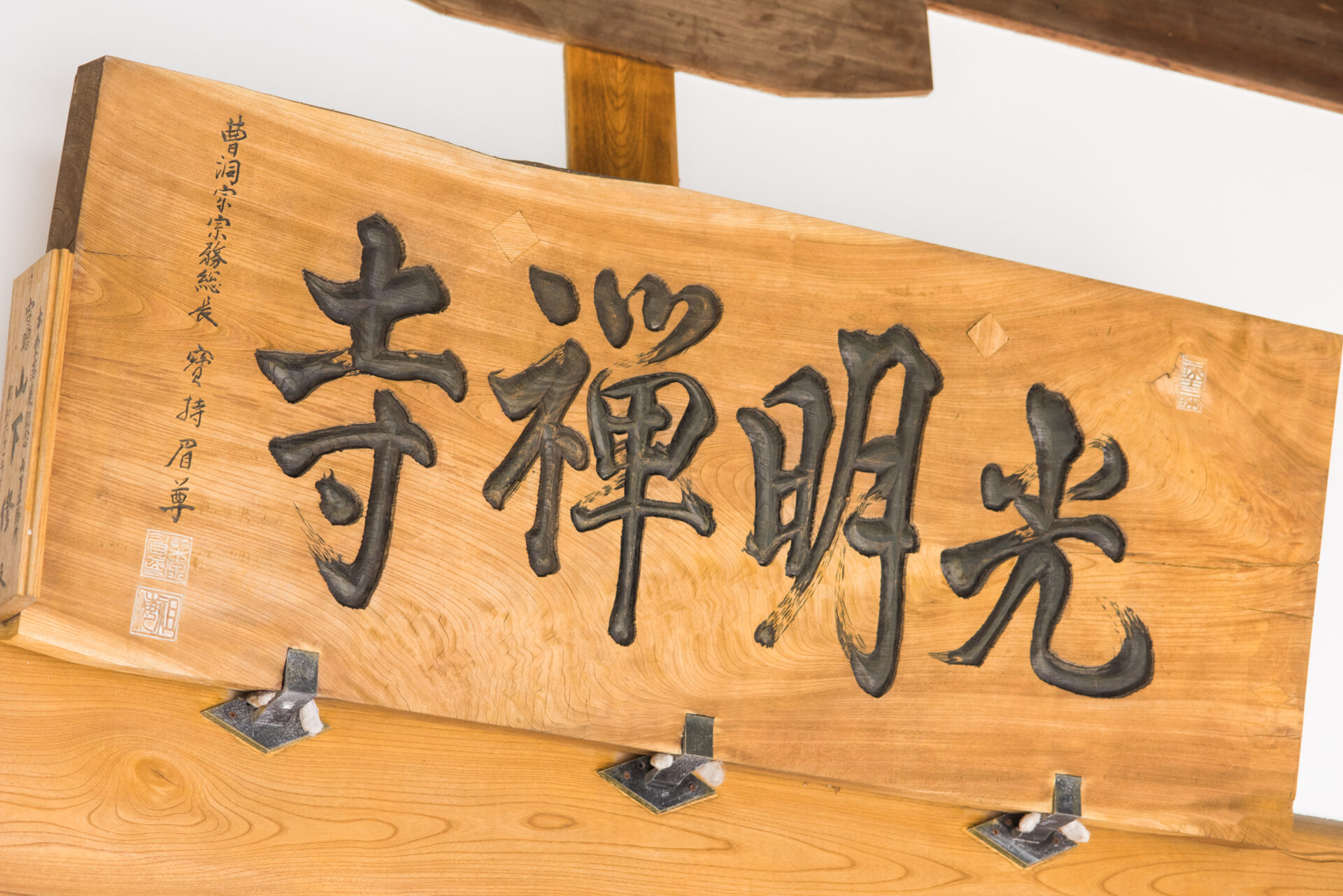
A wooden temple plaque at Komyoji
The Suruga-ki, a regional historical record completed in 1820,
records that Komyoji was founded in 808 by Kobo Daishi (Kukai),
the founder of the Shingon school of Buddhism in Japan,
and that the temple originally belonged to the Shingon Buddhist tradition.
Another regional historical work, the Suruga Shiryo,
written in 1861, also describes Komyoji as an ancient Shingon Buddhist temple
that once had a large temple complex with seven principal buildings.
An old memorial tablet preserved in the Kaisando (Founder’s Hall)
bears the inscription identifying Kobo Daishi as the founder of Komyoji.
Komyoji is therefore recorded in regional historical sources
as having been founded in 808 by Kobo Daishi (Kukai)
as a Shingon Buddhist temple.
Buddhist Statues from the Late Heian Period
Komyoji preserves two especially ancient Buddhist statues:
Fudo Myoo (Acala) and Bishamonten (Vaisravana).
Both are believed to have been created during the late Heian period,
approximately 1,000 years ago.
These statues long predate Komyoji’s conversion to Soto Zen
and are precious reminders of the temple’s long Buddhist history.
The Name “Komyoji” in 1314
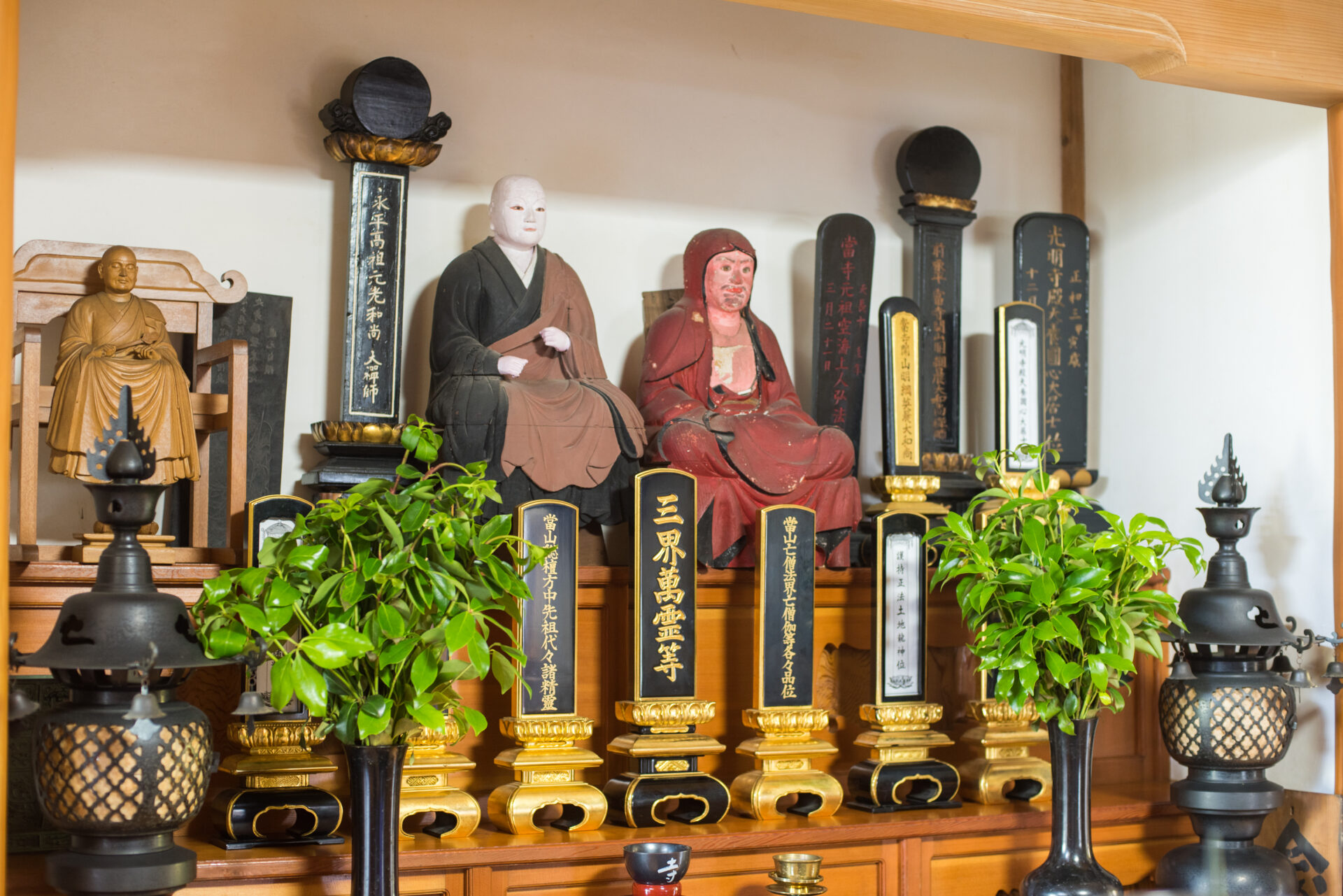
Memorial tablets preserved in the Kaisando (Founder’s Hall)
A memorial tablet preserved in Komyoji’s Kaisando bears
the temple name “Komyoji” together with the date December 8, 1314.
The identity of the person commemorated by this tablet is unknown.
The Suruga-ki also records that the identity of this person
could not be determined.
The person may have been associated with the founding
or a later restoration of the temple.
The existence of this memorial tablet shows that,
by the early fourteenth century,
the temple was already known by the name “Komyoji.”
Becoming a Soto Zen Temple in 1558
In 1558, Komyoji became a Soto Zen Buddhist temple.
Myoko Eishin, the seventh priest of Teirinji Temple in Momozono, Susono,
was invited to become the founding priest of Komyoji’s Soto Zen lineage.
From this time onward, the succession of Soto Zen priests
at Komyoji has continued to the present day.
The present Chief Priest is the 27th priest
in Komyoji Temple’s Soto Zen lineage.
This means that the number “27” refers specifically
to the succession of priests since Komyoji became a Soto Zen temple in 1558,
rather than to the entire history of the temple,
which extends much further back in time.
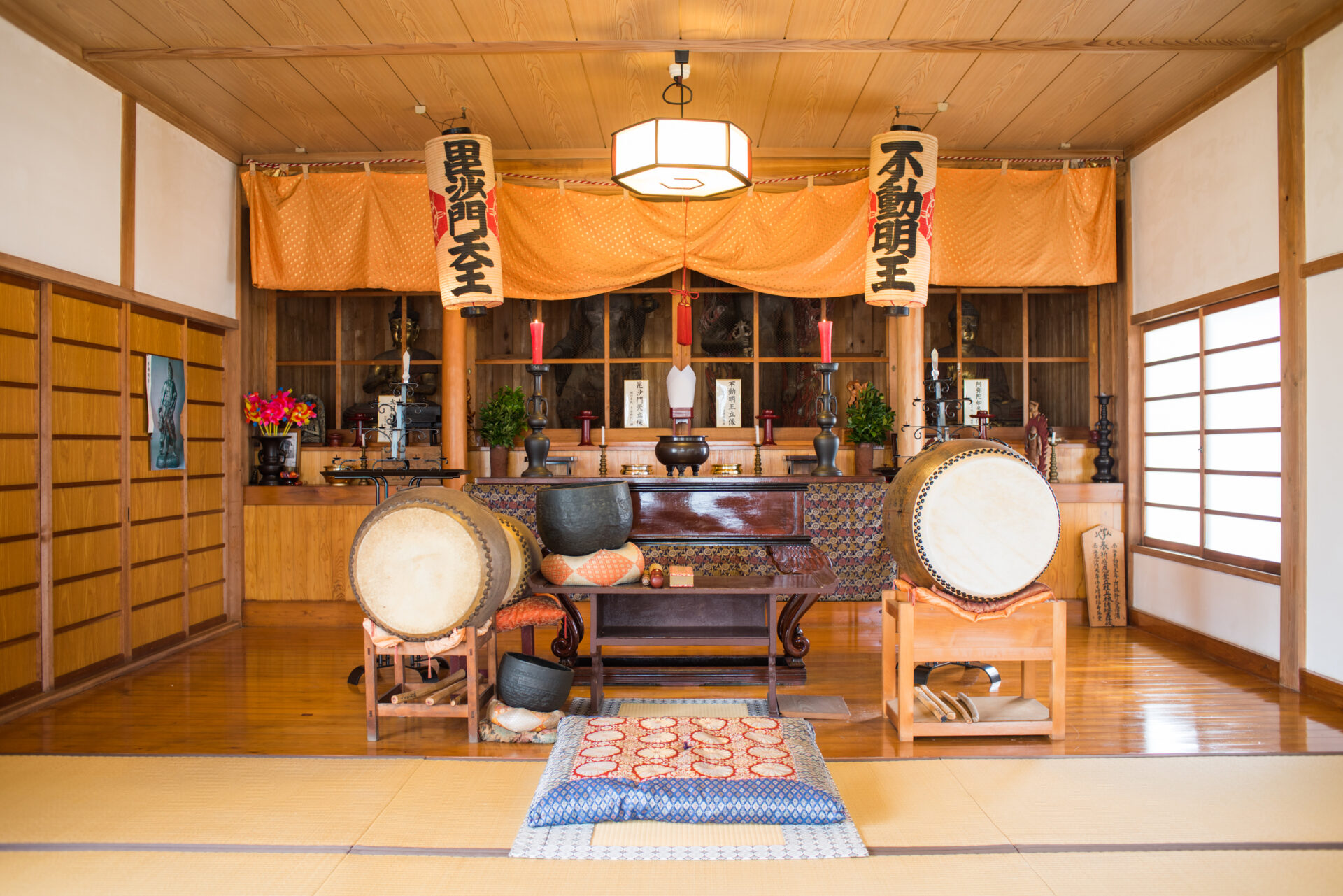
Kanno-do Hall, where Dainichi Nyorai (Mahavairocana),
a Buddha traditionally identified as Amida Nyorai (Amitabha),
Fudo Myoo (Acala), and Bishamonten (Vaisravana) are enshrined
The Burning of Komyoji in 1590
In 1590, Toyotomi Hideyoshi launched his campaign
against the Hojo clan at Odawara Castle
as part of his efforts to unify Japan.
A story passed down in the local community says that,
while Hideyoshi’s forces were advancing from Suruga
across the Hakone mountains toward Odawara,
they set fire to Komyoji and burned its temple complex.
It is also said that the light from the burning temple
helped guide Hideyoshi’s forces through the mountain route
as they advanced toward Odawara.
Fudo Myoo and Bishamonten Saved from the Fire
Another story connected with the events of 1590
concerns the two ancient statues of Fudo Myoo and Bishamonten
that are still preserved at Komyoji today.
When the temple was set on fire,
a monk is said to have hidden the two statues
in a nearby wet rice field to protect them from the flames.
According to local tradition,
voices saying “It hurts, it hurts” were later heard coming from the field.
When the area was dug up, the two Buddhist statues were found.
Part of Bishamonten’s hand has been repaired,
and tradition holds that it was broken during these events.
Both Fudo Myoo and Bishamonten are believed to date
from the late Heian period, approximately 1,000 years ago.
They survived the destruction of 1590
and continue to be preserved at Komyoji today.
Komyoji Today
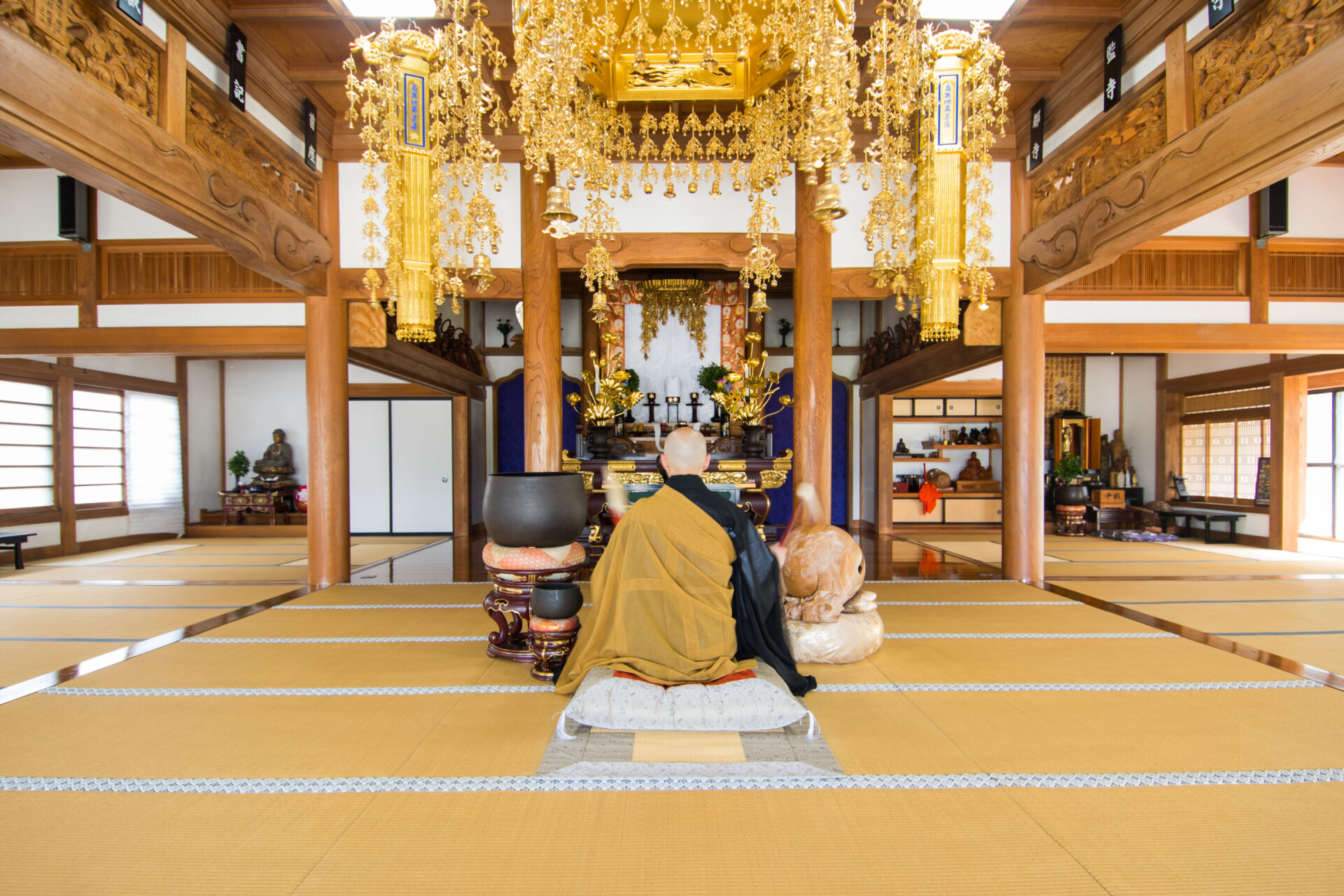
Sutra chanting in the main hall of Komyoji
Throughout its long history,
Komyoji has experienced changes in Buddhist tradition,
the destruction of its buildings,
and many generations of renewal,
while continuing as a Buddhist temple in this community.
Historical records describing its founding in 808,
Buddhist statues dating from the late Heian period,
a memorial tablet bearing the name “Komyoji” and the date 1314,
the Soto Zen lineage continuing from 1558,
and traditions surrounding the events of 1590
all preserve different chapters of Komyoji’s long history.
Today, Komyoji continues to be a place of prayer and memorial services
for the local community.
Through zazen, historic Buddhist statues,
and Japanese Buddhist culture,
we also hope to be an open temple
welcoming visitors from Japan and around the world.