
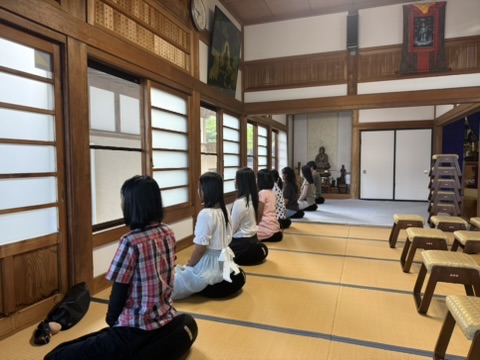
Zazen is the traditional form of seated Zen meditation
practiced in Soto Zen Buddhism.
At Komyoji Temple, we practice zazen according to
the traditional forms of the Soto Zen school.
Zen meditation is not simply a method for calming the mind
or relaxing.
In Soto Zen, zazen itself is an essential practice of the Buddhist Way.
One of the most important expressions in Soto Zen is
shikantaza (只管打坐),
meaning “just sitting.”
Rather than trying to achieve a particular state of mind
or forcing thoughts to stop,
we sit with an upright posture, breathe naturally,
and simply sit.
At Komyoji Temple, beginners are very welcome.
The Chief Priest will guide you step by step through
the basic forms, posture, and practice of zazen.
How to Practice Zen Meditation (Zazen)
1. Gassho — Placing the Palms Together
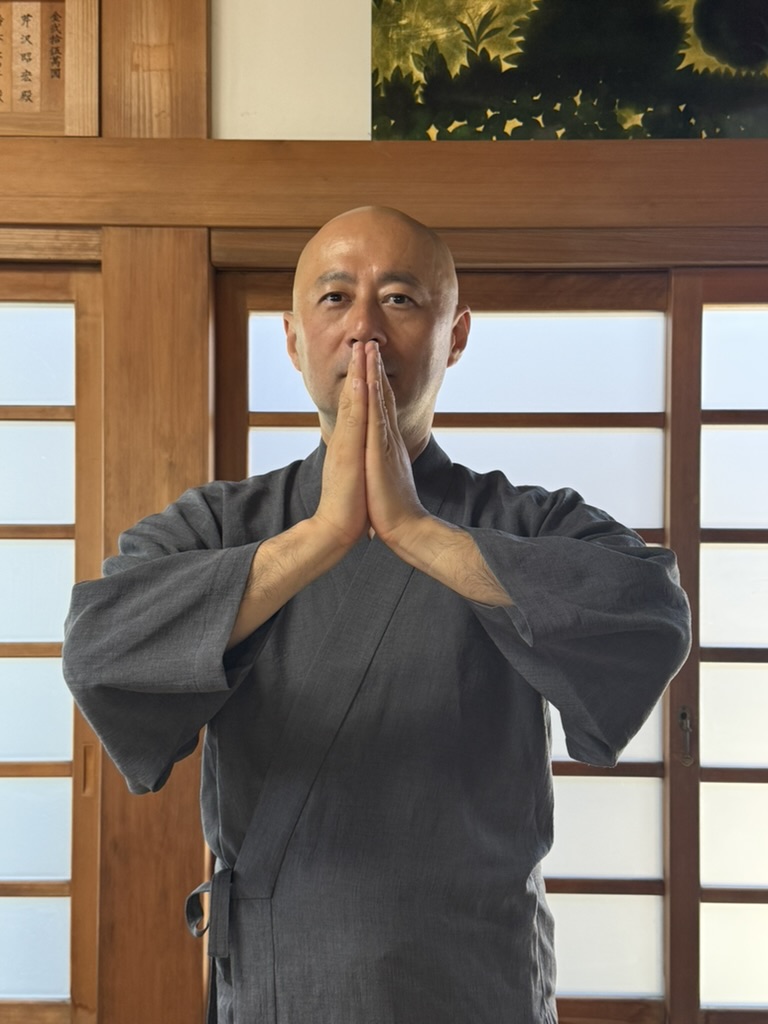
Place your palms together in front of your chest.
Gassho (合掌) is a basic Buddhist gesture
expressing respect toward the Buddha and toward others.
2. Shashu — Hand Position While Standing and Walking
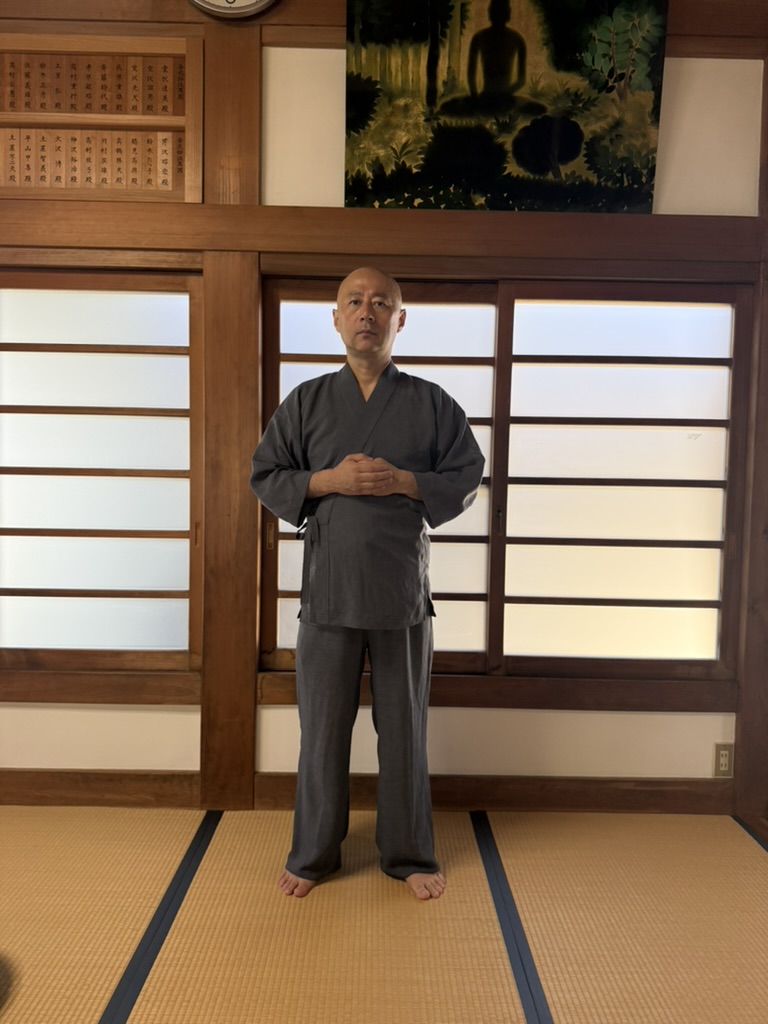
Shashu (叉手) is the traditional hand position
used in Soto Zen when standing or walking.
Make a fist with your left hand, with the thumb inside,
and cover it with your right hand.
Hold your hands naturally in front of your chest.
3. Zafu — The Zazen Cushion
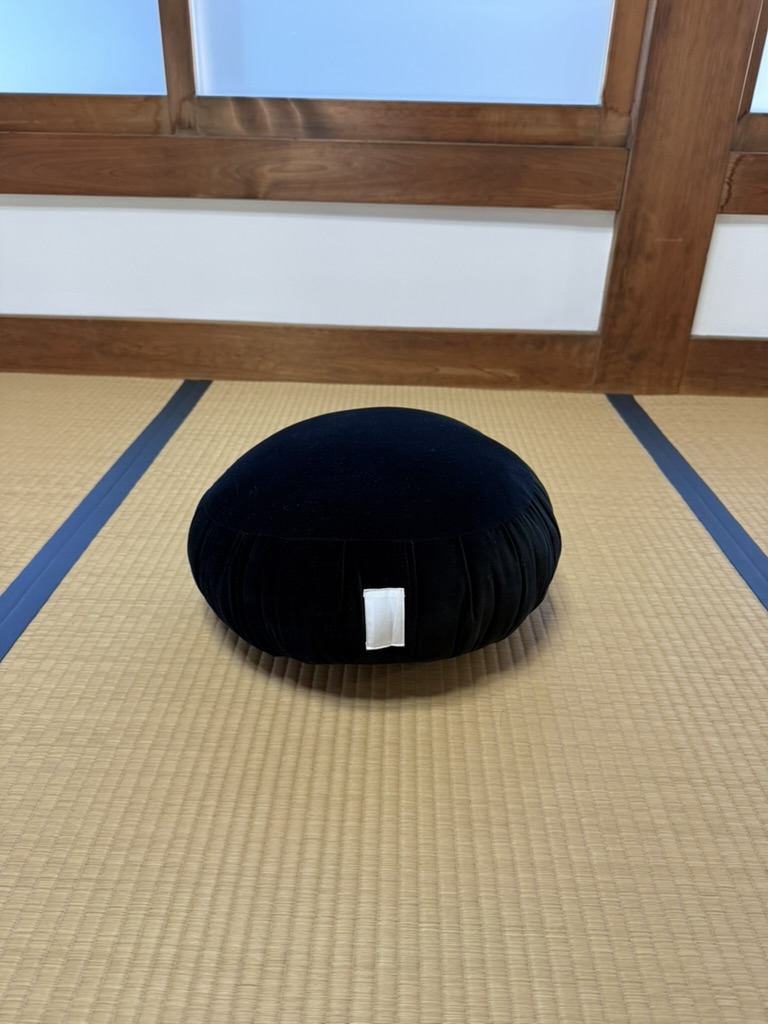
A zafu (坐蒲) is the round cushion used for zazen.
The zafu raises the hips slightly,
making it easier to maintain a stable posture
when sitting with the legs crossed.
4. Rin’i Monjin — Bowing to Your Place
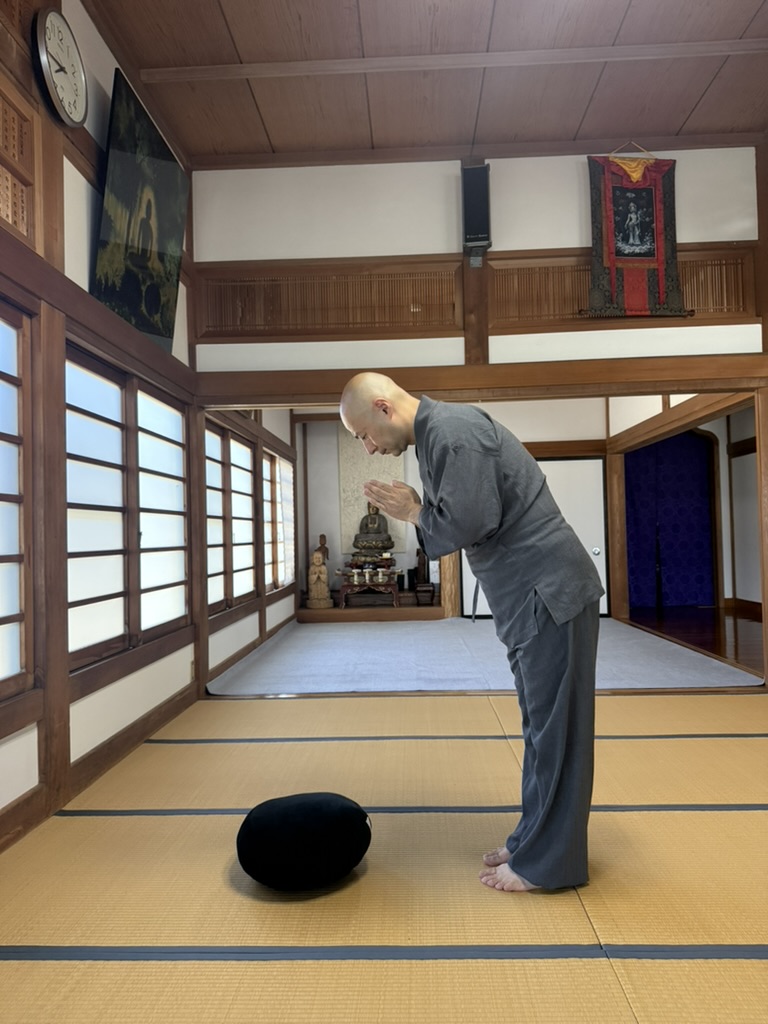
When you arrive at your place for zazen,
face the zafu, place your hands in gassho, and bow.
This bow is called rin’i monjin (隣位問訊)
and is a greeting to the people sitting on either side of you.
5. Taiza Monjin — Bowing to Those Opposite You
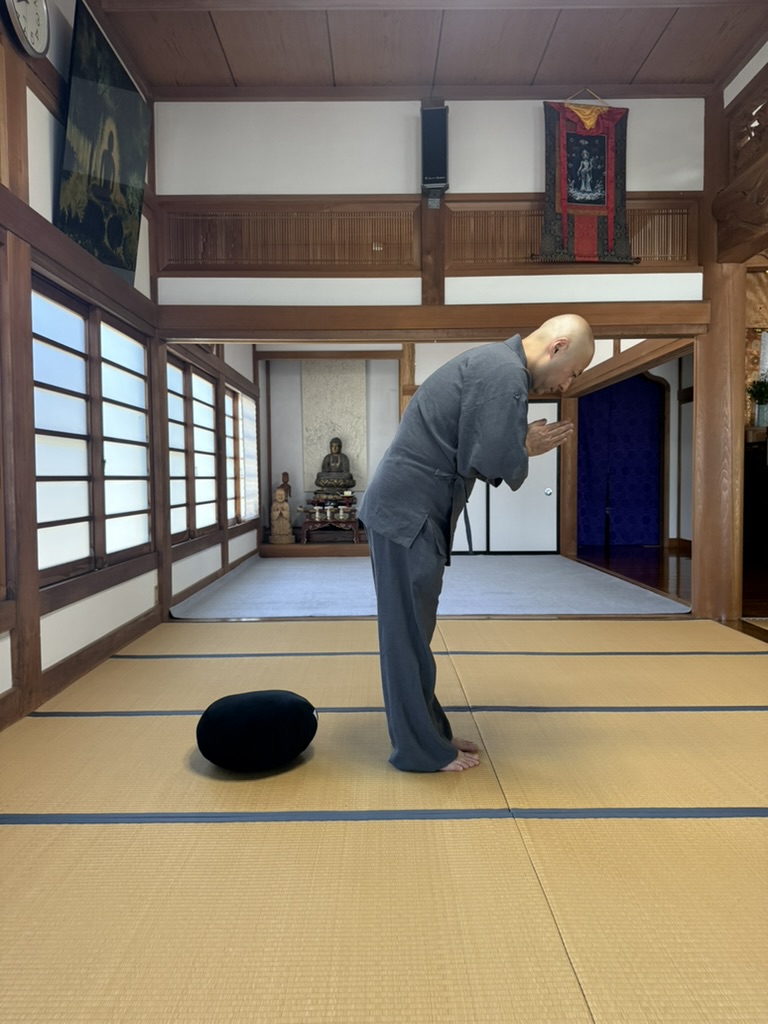
Next, turn clockwise to face the opposite direction,
place your hands in gassho, and bow.
This is called taiza monjin (対坐問訊)
and is a greeting to the people sitting opposite you.
6. Sitting on the Zafu
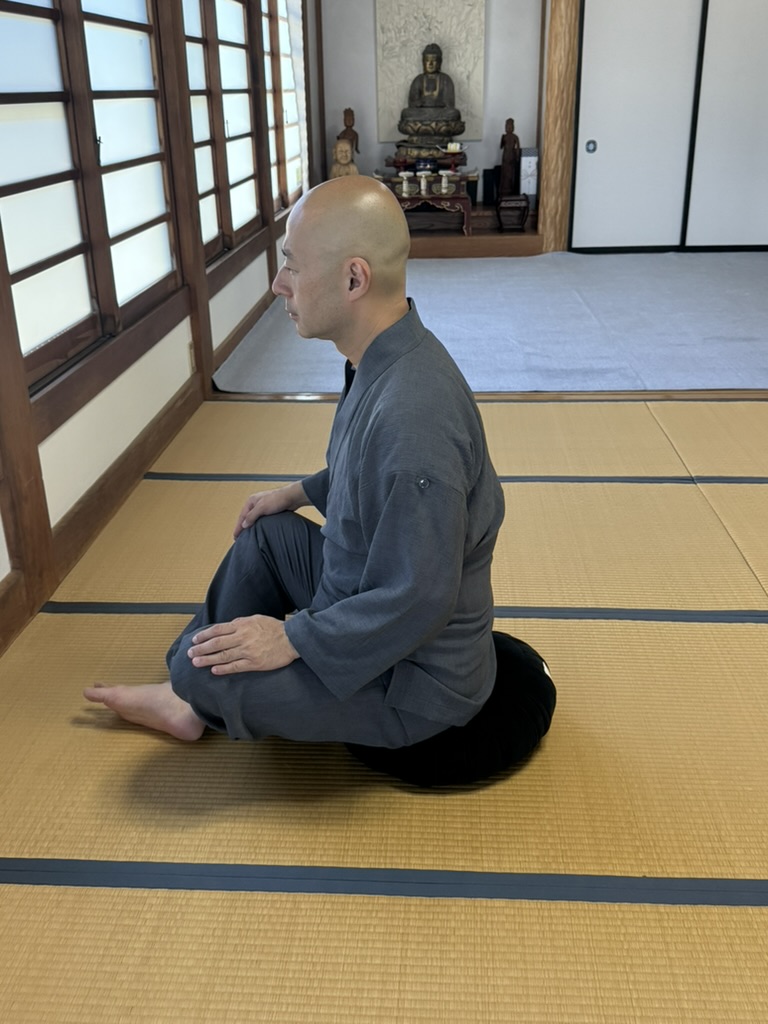
After completing taiza monjin, sit down on the zafu.
Rather than sitting deeply in the center of the cushion,
sit on approximately the front half of the zafu
and find a position in which your body can remain stable.
7. Crossing the Legs — Full Lotus and Half Lotus
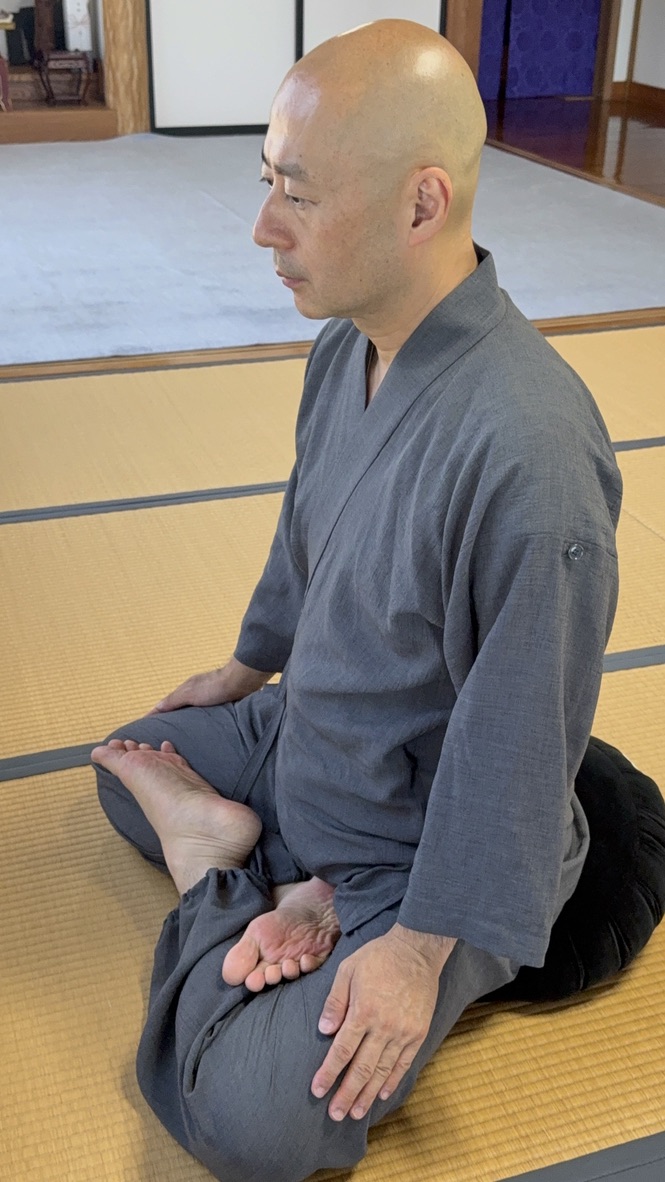
The traditional full-lotus posture is called
kekkafuza (結跏趺坐).
First, place your right foot on your left thigh.
Then place your left foot on your right thigh.
With both feet resting on the opposite thighs,
the body forms a stable seated posture.
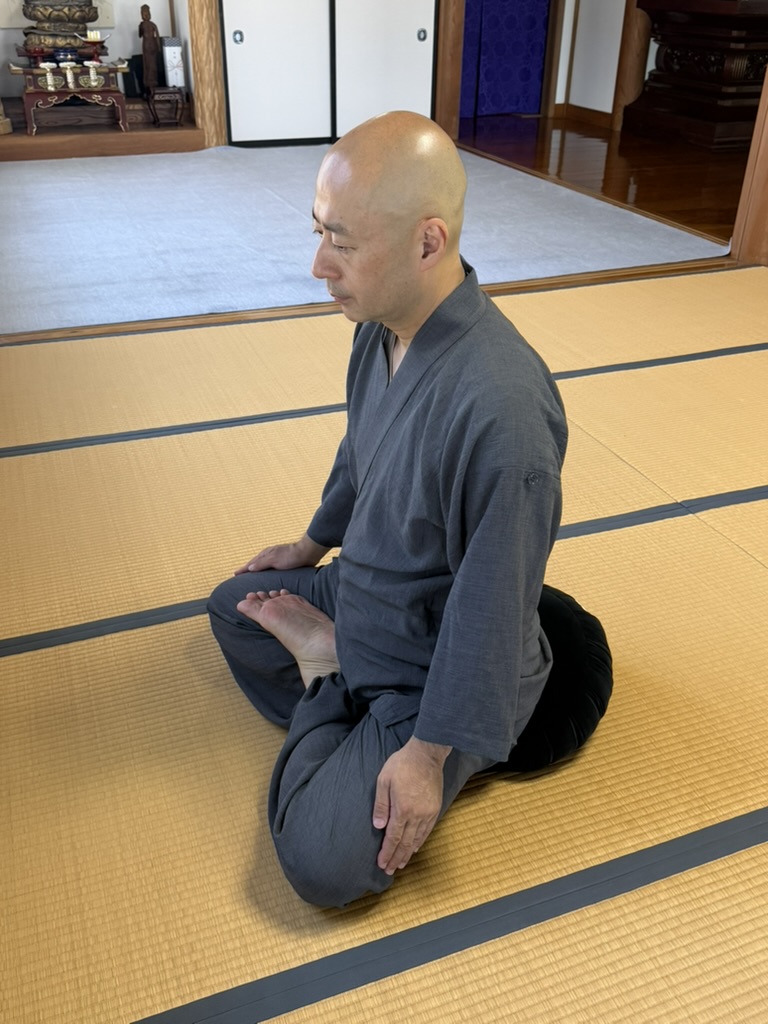
The half-lotus posture is called
hankafuza (半跏趺坐).
In this posture, place the left foot on the right thigh.
Everyone has a different degree of flexibility,
so there is no need to force your legs into the full-lotus position.
Choose a position in which you can sit steadily
without placing unnecessary strain on your body.
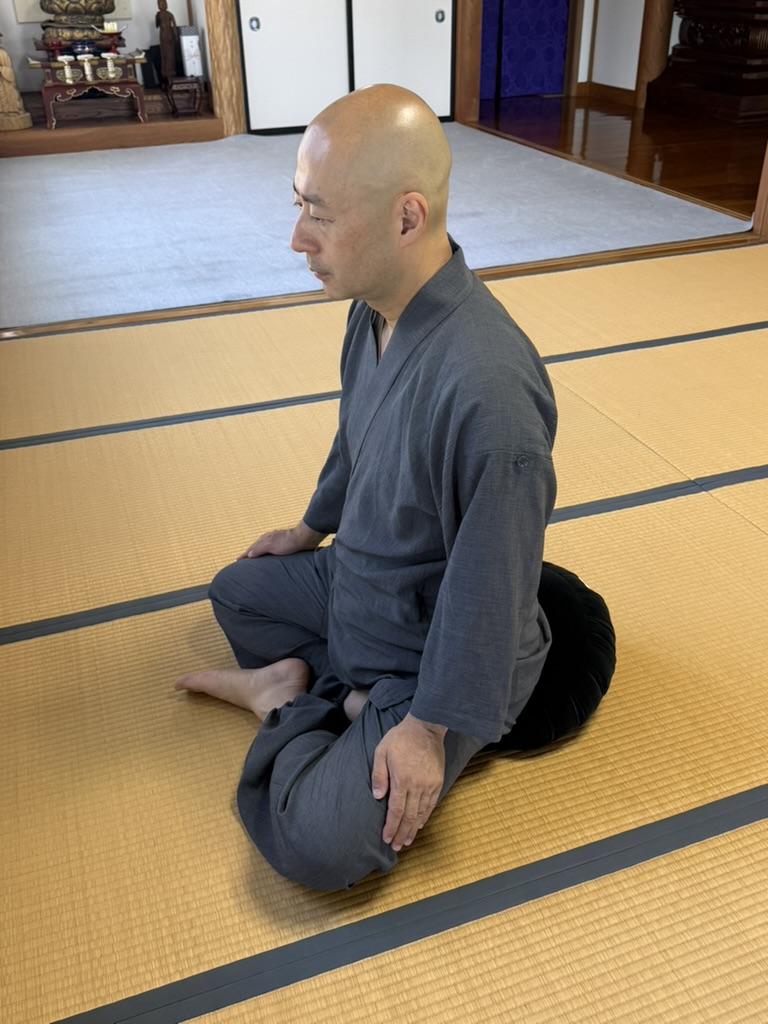
8. Adjusting the Posture
Keep the pelvis upright and allow the spine to extend naturally.
Do not make the body unnecessarily tense.
Keep the head upright and balanced.
Traditionally, the ears are aligned with the shoulders,
and the nose is aligned with the navel.
9. Hokkaijoin — Cosmic Mudra
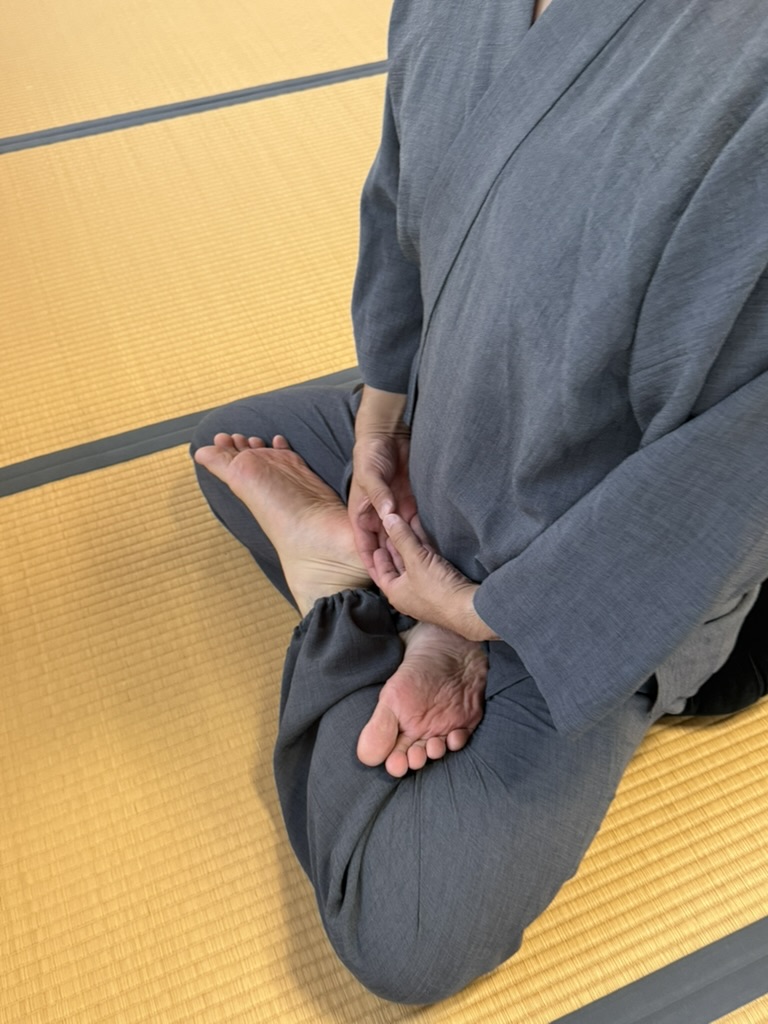
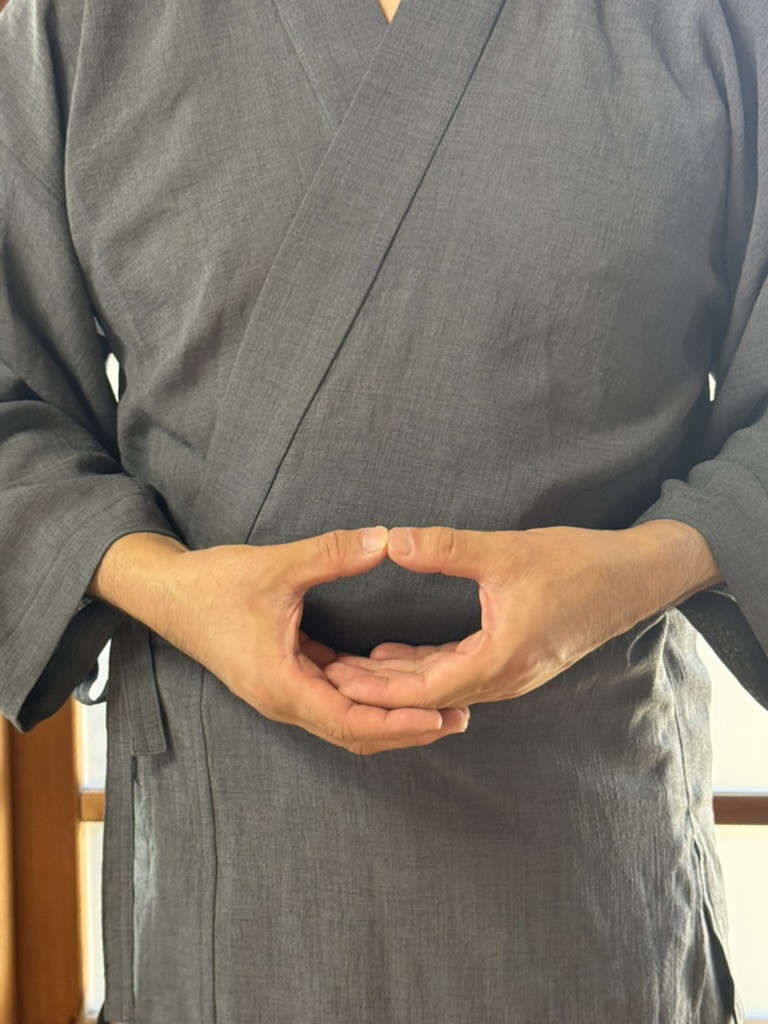
Place your right hand, palm-up, on your left foot,
and place your left hand, palm-up, on your right palm.
Lightly touch the tips of the thumbs together,
forming a natural oval shape with the hands.
This hand position used in Soto Zen zazen is called
Hokkaijoin (法界定印), or the Cosmic Mudra.
10. Mouth and Tongue
Keep the mouth closed and place the tip of the tongue
against the roof of the mouth.
Let the teeth meet naturally
without putting unnecessary tension in the jaw.
11. Eyes and Gaze
Keep the eyes naturally open
and lower the gaze toward the floor.
Do not stare intensely at one particular point.
Simply maintain a relaxed and natural gaze.
12. Kanki-issoku — Exhale Completely and Take a Breath
Quietly make a deep exhalation and inhalation.
Slightly open your mouth and exhale smoothly and slowly.
Exhale from the abdomen so that the air is released fully.
Then close your mouth
and continue breathing naturally through your nose.
This is called kanki-issoku (欠気一息).
13. Sayu Yoshin — Swaying the Body
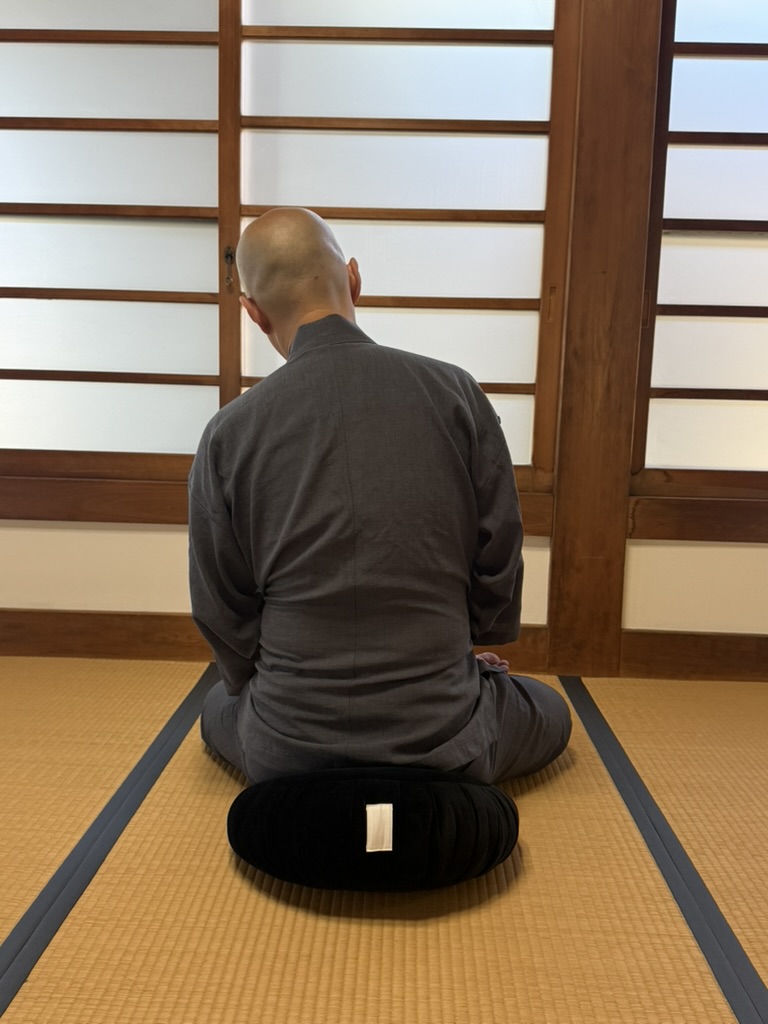
Slowly sway the upper body from side to side several times.
Begin with slightly larger movements,
then gradually make them smaller
until the body comes naturally to rest at the center
in a stable and balanced position.
Shikantaza — Just Sitting
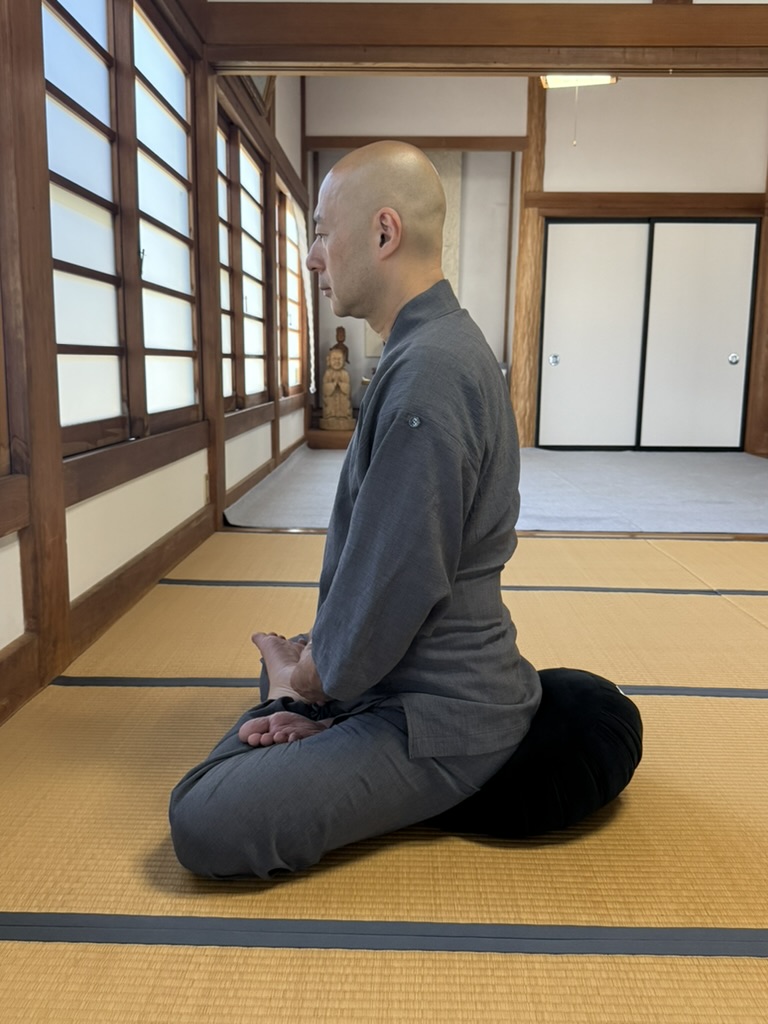
Once the posture has been established,
simply sit quietly.
In Soto Zen zazen, there is no need
to concentrate continuously on a particular thought
or to try to make the mind completely empty.
While sitting, many thoughts, memories, and emotions may arise.
Rather than following them or trying to force them away,
allow them to pass and continue sitting.
This is the practice of
shikantaza — “just sitting”,
which is central to Soto Zen.
Ending Zazen
The end of a period of zazen is indicated by the sound of a bell.
1. Gassho and Bow
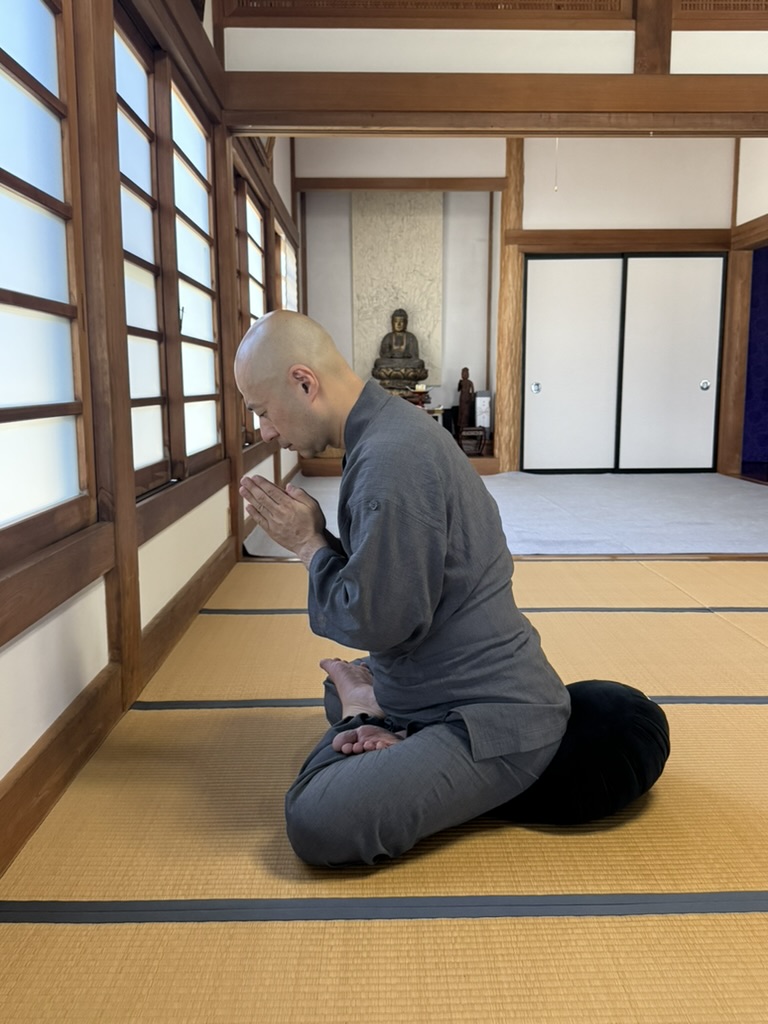
When the bell sounds once,
place your hands together in gassho
and bow while remaining seated.
2. Sayu Yoshin — Swaying the Body
Slowly begin to sway the body from side to side.
This time, begin with small movements
and gradually make them larger,
gently loosening the body after sitting.
3. Uncross the Legs
Slowly uncross your legs.
Your legs may feel numb or stiff after sitting,
so do not stand up suddenly.
Take a moment to make sure your body is ready before rising.
4. Restore the Shape of the Zafu
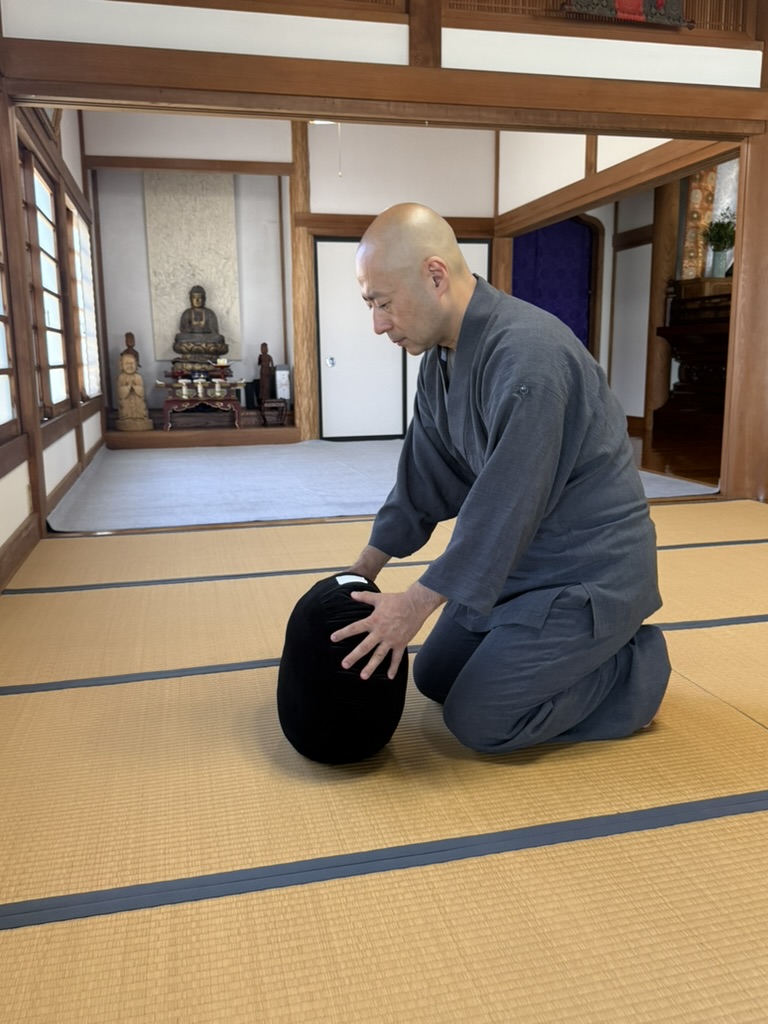
Zazen may leave the zafu slightly flattened or misshapen.
Use your hands to restore it to its original round shape.
The zafu used for practice is also treated with care.
5. Rin’i Monjin
As at the beginning of zazen,
face the place where you were sitting,
place your hands together in gassho, and bow.
6. Taiza Monjin
Then turn to face the opposite direction,
place your hands together in gassho, and bow.
This completes the formal practice of zazen.
Kinhin — Walking Between Periods of Zazen
When several periods of zazen are practiced consecutively,
they may be separated by
kinhin (経行),
a traditional form of walking practice.
Kinhin is not simply a break from zazen.
Walking itself continues the practice of the Buddhist Way.
The detailed form of kinhin is not covered
in this introductory guide.
Chair Zazen
If sitting cross-legged is difficult,
zazen can also be practiced using a chair.
Sit upright on the chair with both feet resting firmly on the floor.
Keep the spine naturally extended
and place the hands in Hokkaijoin (Cosmic Mudra),
just as in the traditional seated posture.
The important point is not to force the legs
into a particular position,
but to sit in a stable posture
without placing unnecessary strain on the body.
Experience Zen Meditation at Komyoji Temple
Visitors are welcome to experience
traditional Soto Zen meditation at Komyoji Temple,
even if they have never practiced zazen before.
The Chief Priest will explain the practice step by step,
beginning with basic Buddhist forms such as gassho and shashu,
followed by how to use the zafu,
how to arrange the legs,
posture, Hokkaijoin (Cosmic Mudra), the direction of the gaze,
and the meaning of zazen in Soto Zen Buddhism.
Private and Group Zen Meditation Experiences
Individuals and groups may arrange a guided zazen experience
by making a reservation in advance.
Suggested offering: ¥2,000 per person
Beginners are very welcome.
Saturday Morning Zazen
Komyoji Temple holds a regular Zen meditation gathering
every Saturday from 7:00 a.m.
There is no participation fee
for the Saturday morning zazen gathering.
If you wish, you are welcome to leave a voluntary offering
in the temple offering box.
The gathering may occasionally be cancelled
because of temple ceremonies or other commitments.
If you would like to attend,
please contact Komyoji Temple in advance
to confirm that zazen will be held that morning.